
What the Table Is Telling Us
What 1,000 guests and 500 servers say about hospitality technology and the modern full service restaurant

What does the research tell us?
Technology earns its place when it supports the people around the table.
That idea connects the guest and server findings. Among guests, 60.3% said tabletop technology enhances the experience or that they like having both a server and tabletop technology. Among servers, 77.6% said technology helps them in their jobs.
The rest of the data explains what support should look like. Guests choose full service for atmosphere, value clear menu information, and want technology to fit naturally into the meal. Servers see room to improve parts of the shift, especially during busy moments and handoffs.
For restaurant leaders, the narrative is clear. Technology should give guests useful control, help servers stay focused on service, and give operators better visibility into what is happening at the table.
What are the key findings?
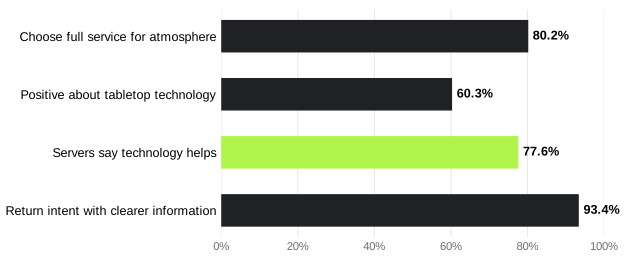
- Experience sets the standard. 80.2% chose atmosphere or a family friendly atmosphere as the main reason for visiting full service.
- Technology has permission at the table. 60.3% said it enhances the experience or works well alongside a server.
- Payment starts from a strong baseline. 98.8% were satisfied with the restaurant payment options available to them.
- Clear information builds confidence. 93.4% said they would be more likely to return when ingredients, allergens, and nutrition are clearly listed.
- Servers see value in technology. 77.6% said technology helps them in their jobs.
Sources: Ziosk and Pollfish Consumer Restaurant Survey, Q1 through Q7, n=1,000; Server Focused Survey, Q3, Q4, and Q7, n=500. Raw response percentages shown.
Why do guests choose full service restaurants?
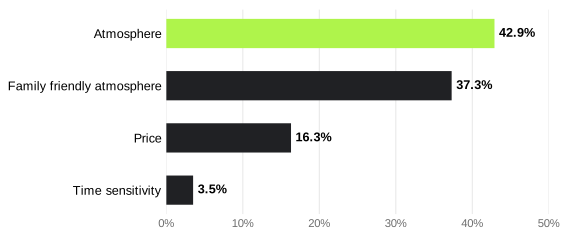
Guests choose full service for the experience. Atmosphere led the responses at 42.9%, followed by a family friendly atmosphere at 37.3%. Together, those answers represented 80.2% of the sample.
Price was selected by 16.3%, and time sensitivity was selected by 3.5%. The table is where the value of full service takes shape through the setting, the pace, and the interaction with the service team.
Technology earns its place here by supporting the experience guests came for. Easier reordering, clearer information, and payment at the guest's pace can make the visit feel more responsive while the server remains part of the meal.
Operator conclusion Protect the experience first. Use technology to make helpful moments easier for guests and servers.
Sources: Ziosk and Pollfish Consumer Restaurant Survey, Q1 through Q7, n=1,000; Server Focused Survey, Q3, Q4, and Q7, n=500. Raw response percentages shown.
How do guests want technology to fit into the meal?
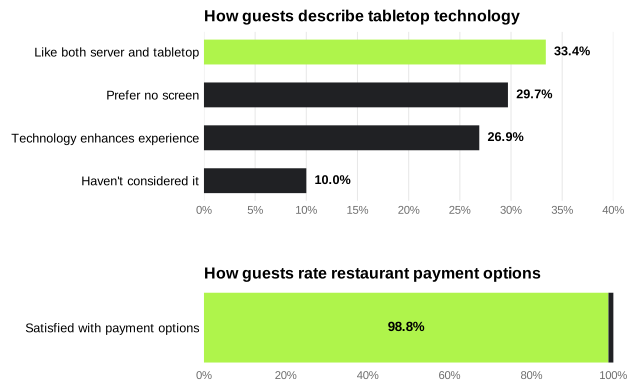
Most guests see a role for tabletop technology. A combined 60.3% said it enhances the experience or that they like having both a server and tabletop technology.
Another 29.7% said they don't want a screen at the table. The size of that group makes choice important. Guests should understand what the technology can do, decide when to use it, and reach a server easily.
Payment helps define the opportunity. A combined 98.8% were satisfied with the payment options available at restaurants. Tabletop payment can build on that baseline by letting guests pay when ready and keeping loyalty, feedback, receipt, and tipping choices together in one clear flow.
Operator conclusion Give guests useful choices and keep server access visible throughout the meal
Source: Consumer Restaurant Survey Q2 and Q3. Percentages reflect raw answers.
What information helps guests decide and return?
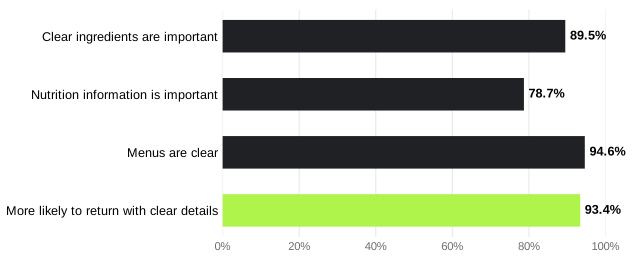
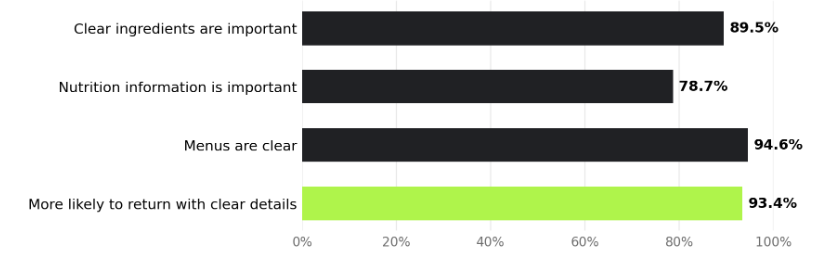
Guests value clear menu information. A combined 89.5% said clearly listed ingredients are important, and 78.7% said calorie or nutrition information is important.
Most respondents also described restaurant menus as clear. A combined 94.6% rated the menus they encounter as very clear or somewhat clear. That strong result shows that guests can value additional detail even when the core menu already works well.
Clear information also connects to return intent. A combined 93.4% said they would be more likely to return when a restaurant clearly lists ingredients, allergens, and nutrition information.
Technology earns its place by making this information easy to explore without crowding the primary menu. The same table experience can connect discovery with ordering, loyalty, and feedback.
Operator conclusion Treat menu information as part of guest confidence and the path to another visit.
Source: Consumer Restaurant Survey Q4 through Q7. The return intent question combined ingredients, allergens, and nutrition and didn't include a neutral response.
Where can technology support servers during the shift?
Servers already see value in technology. Among the 500 surveyed, 77.6% said technology helps them in their jobs.
The shift still contains pressure points. Nearly one in five respondents described peak hour workload as somewhat or very overwhelming. More than one in three rated communication between the front and back of house as fair or poor.
Tabletop technology can support the flow of service at those moments. Guests can complete routine actions such as reordering, payment, loyalty enrollment, and feedback while the server stays focused on hospitality and the needs of the full section.
The broader server survey also points to the importance of scheduling, pay, management support, and training. Those priorities require direct action from the restaurant. Technology should stay focused on the parts of the shift it can improve.
Operator conclusion Use technology to support specific moments in the shift and give servers a clear role in how it works.
Source: Server Focused Survey Q3, Q4, and Q7. Positive categories were combined from raw answers where applicable.
What should restaurant leaders look for in tabletop technology?
The research points to a shared standard. A strong tabletop platform should work for guests, servers, and operators at the same time.
Can guests order, pay, find information, join loyalty, or give feedback at the moment they choose?
Does the tool remove friction from specific steps and keep server help easy to access?
Can it connect with the restaurant technology already in place and support a practical rollout?
Can the operator track adoption, guest behavior, service impact, and financial outcomes?
Increase loyalty enrollment and redemption by including it in the checkout flow
Gather feedback from two out of five guests before they leave, turning checkouts into real-time insights
Each leadership role will enter the decision through a different business question. The research gives those leaders a common view of the table and the people around it.
Operator conclusion Choose technology that improves the guest experience, supports the shift, fits the existing system, and produces measurable value.
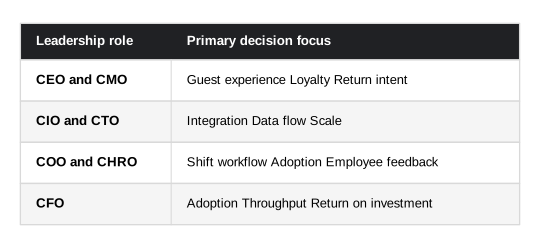
Ziosk interpretation of the guest and server research for restaurant leadership teams.
What does the research say overall?
Guests continue to choose full service restaurants for the experience. Most are open to tabletop technology when it enhances the visit or works alongside a server. They also value clear information and report high satisfaction with current payment options.
Servers describe a workplace with recognizable pressure points, and most say technology helps them do the job. The findings give restaurant groups a practical direction for technology at the table.
Technology earns its place when it supports the people around the table. It can give guests more control, help servers manage routine moments, and give operators timely signals from the point where hospitality happens.

Questions and Answers
What are restaurant leaders asking?
Why do guests choose full service restaurants?
Atmosphere and a family friendly atmosphere accounted for 80.2% of answers. Price accounted for 16.3%, and time sensitivity accounted for 3.5%.
Do guests want tabletop technology?
A combined 60.3% said tabletop technology enhances the experience or that they like having both a server and tabletop technology. Another 29.7% said they don't want a screen at the table, and 10.0% hadn't considered it.
Are guests satisfied with restaurant payment options?
Yes. A combined 98.8% were very or somewhat satisfied with the options available to them.
Does menu transparency affect return intent?
A combined 93.4% said they would be more likely to return when a restaurant clearly lists ingredients, allergens, and nutrition information. The survey measured stated likelihood within this sample.
Does technology help restaurant servers?
Yes. Among the 500 servers surveyed, 77.6% said technology helps them in their jobs.
Where do servers feel pressure during a shift?
A combined 19.8% described peak hour workload as somewhat or very overwhelming. A combined 35.8% rated front of house and back of house communication as fair or poor.
Research Details
What are restaurant leaders asking?
Why do guests choose full service restaurants?
Atmosphere and a family friendly atmosphere accounted for 80.2% of answers. Price accounted for 16.3%, and time sensitivity accounted for 3.5%.
Do guests want tabletop technology?
A combined 60.3% said tabletop technology enhances the experience or that they like having both a server and tabletop technology. Another 29.7% said they don't want a screen at the table, and 10.0% hadn't considered it.
Are guests satisfied with restaurant payment options?
Yes. A combined 98.8% were very or somewhat satisfied with the options available to them.
Does menu transparency affect return intent?
A combined 93.4% said they would be more likely to return when a restaurant clearly lists ingredients, allergens, and nutrition information. The survey measured stated likelihood within this sample.
Does technology help restaurant servers?
Yes. Among the 500 servers surveyed, 77.6% said technology helps them in their jobs.
Where do servers feel pressure during a shift?
A combined 19.8% described peak hour workload as somewhat or very overwhelming. A combined 35.8% rated front of house and back of house communication as fair or poor.
Who took part in the research?
The Consumer Restaurant Survey included 1,000 respondents who had dined at a full service restaurant. A combined 77.7% had visited within the past month, including 39.0% who had visited within the past week.
The Server Focused Survey included 500 respondents. The survey asked about job satisfaction, improvement areas, communication, peak workload, tips, retention, and technology.
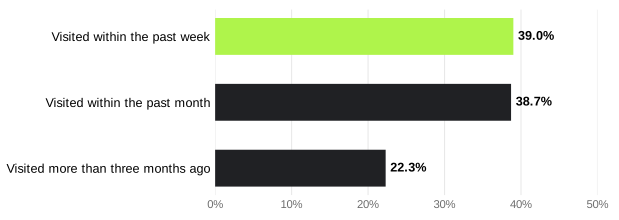
The Consumer Restaurant Survey included 1,000 respondents who had dined at a full service restaurant. A combined 77.7% had visited within the past month, including 39.0% who had visited within the past week.
The Server Focused Survey included 500 respondents. The survey asked about job satisfaction, improvement areas, communication, peak workload, tips, retention, and technology.
How was the research conducted?
Ziosk commissioned both surveys through Pollfish on August 13, 2026. This report uses raw Answers (%) for single selection questions and Respondents (%) for multiple selection questions.
The supplied topline reports don't describe geography, respondent demographics, detailed recruitment criteria, weighting methodology, confidence intervals, or quality controls. The findings should be read as directional first party evidence from the respondents surveyed.
Some figures combine answer choices. Combined percentages were calculated from the raw results shown in the Pollfish reports. Totals may vary slightly due to rounding. Multi-select questions can total more than 100% because respondents could select more than one answer.
What does Ziosk do?
Ziosk connects the most important moments at the table, including ordering, payment, loyalty, guest feedback, and engagement. The platform gives guests more control over their visit, helps servers manage the flow of service, and gives restaurant brands real time signals from the point of interaction.
Built for full service restaurants, Ziosk works with a brand's existing technology and experience. Restaurant groups can use the platform to make service more responsive and turn activity at the table into clear operational and guest insight.
What our partners are saying

The tablets have been very popular with guests. About 94% of customers choose to pay on them, CEO Kevin Hochman said at last year’s Restaurant Leadership Conference, and they fill out about 20 million surveys a year.

The vast majority of customers who have used the system say they like it, according to Mujica. Plus, he said, employees’ tips are higher. And the faster payment process is trimming up to five minutes off of table turns.

In test restaurants, about 80% of customers paid through the Ziosk tabletop unit, Spanos said. “With features like pay at the table, tap to pay with mobile wallet, and entertainment, Outback is offering guests a faster and simpler experience.”

One  Platform.
Every Department.
Measurable Results.
Bring payments, feedback, loyalty, and operations into one connected system, so every part of your business runs like it should: better.
