Guests Who Ordered On Demand Returned Up to 7 Days Sooner
What 251 million restaurant visits reveal about on-demand ordering and return behavior
By Tim Leslie, VP, Sales & Customer Execution, Ziosk
Restaurants rely on guests coming back. But could something simple, like letting guests order an appetizer or another drink whenever they want, influence the timing of a return visit?
The pattern is hard to ignore.
I analyzed 251 million restaurant visits from 125 million uniquely trackable guests to explore whether the way guests interact with tabletop technology was associated with when they came back.
Guests who used Ziosk only to pay returned after a median of 30 days. Guests who used Ziosk to order? They returned in a median of 23 to 26 days, meaning:
Guests who ordered on demand returned up to 7 days sooner.
What the research found
My analysis compared several common actions guests can take through Ziosk. Guests who:
- Ordered an appetizer returned in a median of 23 days
- Reordered a drink returned in a median of 24 days
- Ordered dessert returned in a median of 24 days
- Used Ziosk only to pay returned in a median of 30 days
Appetizers, drink reorders, and desserts happen at different points in the meal, yet each was associated with an earlier return. The common thread was an easy way to act when the decision was made.
Why the moment of decision matters
During my 23 years at Brinker International, I learned to look at hospitality through Norman Brinker's eyes. When we toured restaurants, he started in the parking lot, noticing the lights, landscaping, and every surface a guest might see before a server said a word. Inside, he spoke with guests and thanked the teams in the kitchen and dish room. His lesson stayed with me: the “moments of truth” I learned begin before the meal and accumulate through every small moment, including how long guests have to wait after they decide on something.
Every decision at the table has a window of intent. A guest wants another drink. A family decides to share dessert. A table is ready to pay. In each case, timing shapes whether the guest acts on the decision. A missed moment will often cause friction and frustration for the guest.
But the server may be helping another table when that moment arrives. This forces guests to wait, which could cause them to reconsider an order or could negatively affect their experience. Ziosk gives guests a direct path to order or begin payment when they're ready, while the server continues guiding the visit.
In my experience, this often leaves guests with a quiet feeling: a sense of comfort, control, and recognition. They may never name it. They simply remember that the visit felt easy and that they'll be able to move at their own pace when they return. That expectation may be part of the hidden value of on-demand ordering.
What returning 7 days sooner can mean for restaurants
Thanks to this shorter return interval, the restaurant gains another opportunity to serve a guest it has already earned. That matters whether the operator runs one location, a regional group, or a national chain.
It also expands how operators can evaluate ordering engagement. An appetizer, drink, or dessert can add revenue to the current check. The same interaction is shown to be associated with a shorter wait until the guest's next visit.
Together, those outcomes connect two useful measures: incremental sales today and visit cadence over time. The value of an ordering interaction may continue after the check closes.
How the pattern was tested
To uncover this insight, I used anonymized payment identifiers to recognize return visits without using guest names, full card numbers, or other sensitive personal information. The dataset covered 13 months, from June 2025 through June 2026.
The broad analysis raised an important question: were guests who used ordering features simply more frequent restaurant visitors? To explore that possibility, I compared 56,913 guests with themselves. Each guest had at least one visit with two or more ordering interactions and at least one visit with no ordering interactions.
After the higher-engagement visits where they interacted with the Ziosk twice or more, those same guests returned three days sooner, a 10 percent improvement in the median return interval. Sixty percent individually followed the pattern.
Comparing the same people across different visits helps reduce the influence of naturally frequent and infrequent diners. Other factors can still affect return behavior, but the same-guest result strengthens the broader finding.
What operators can do with the findings
The practical opportunity is straightforward: make it easy for guests to act when intent is highest, so they leave with a positive feeling.
Introduce the option
Servers can briefly let guests know that Ziosk is available whenever they want to add an item or pay. A clear introduction makes on-demand ordering feel like a natural part of the service experience.
Keep the next action visible
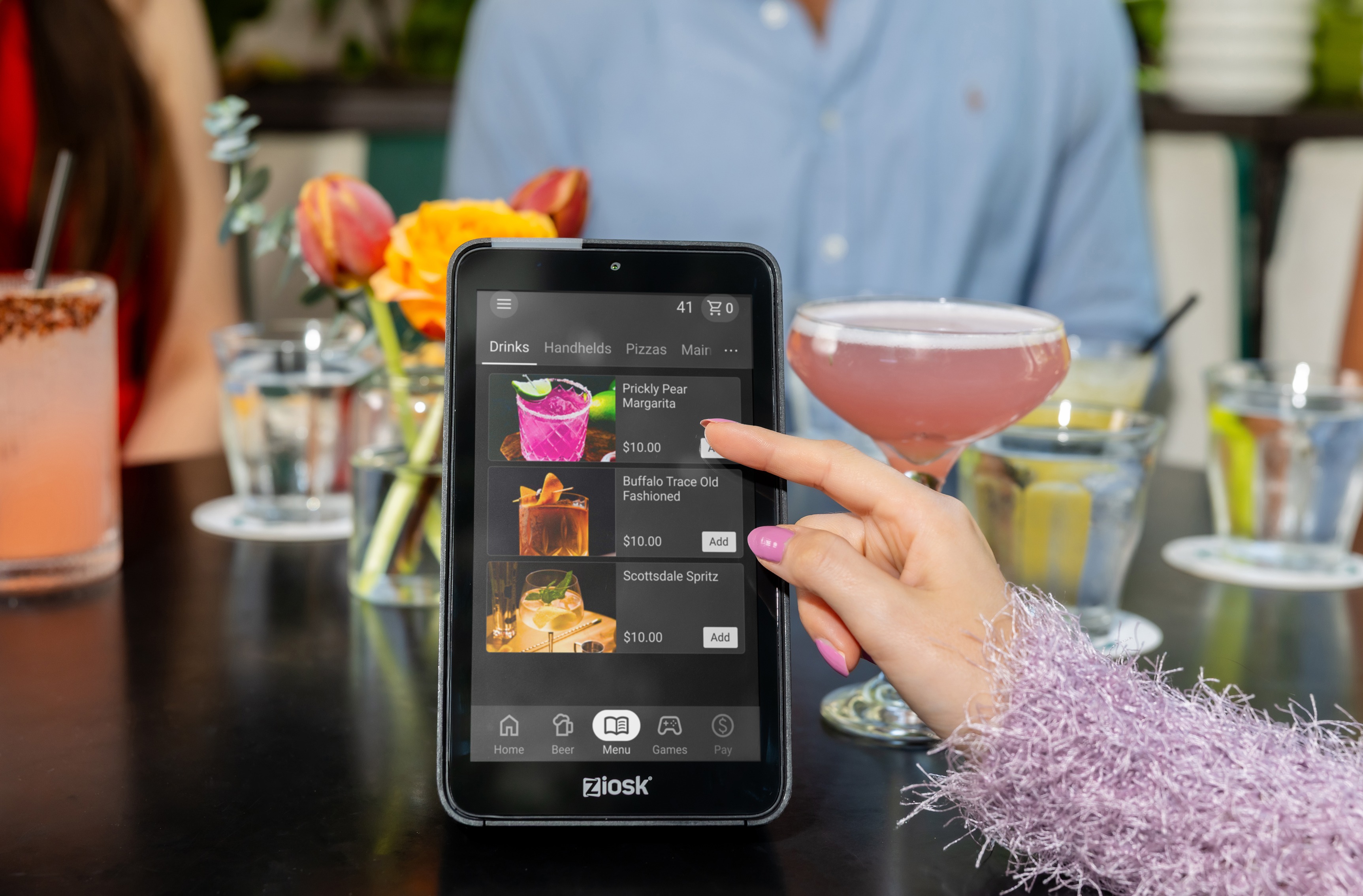
Relevant prompts for appetizers, drink reorders, desserts, and payment should be easy to find. Visibility helps turn a guest's decision into an immediate action.
Measure engagement and what happens next
Operators can track the percentage of checks with an ordering interaction and review engagement by location, shift, or server. Pairing those measures with incremental sales and return timing creates a fuller view of the value generated at the table.
What this means at the table
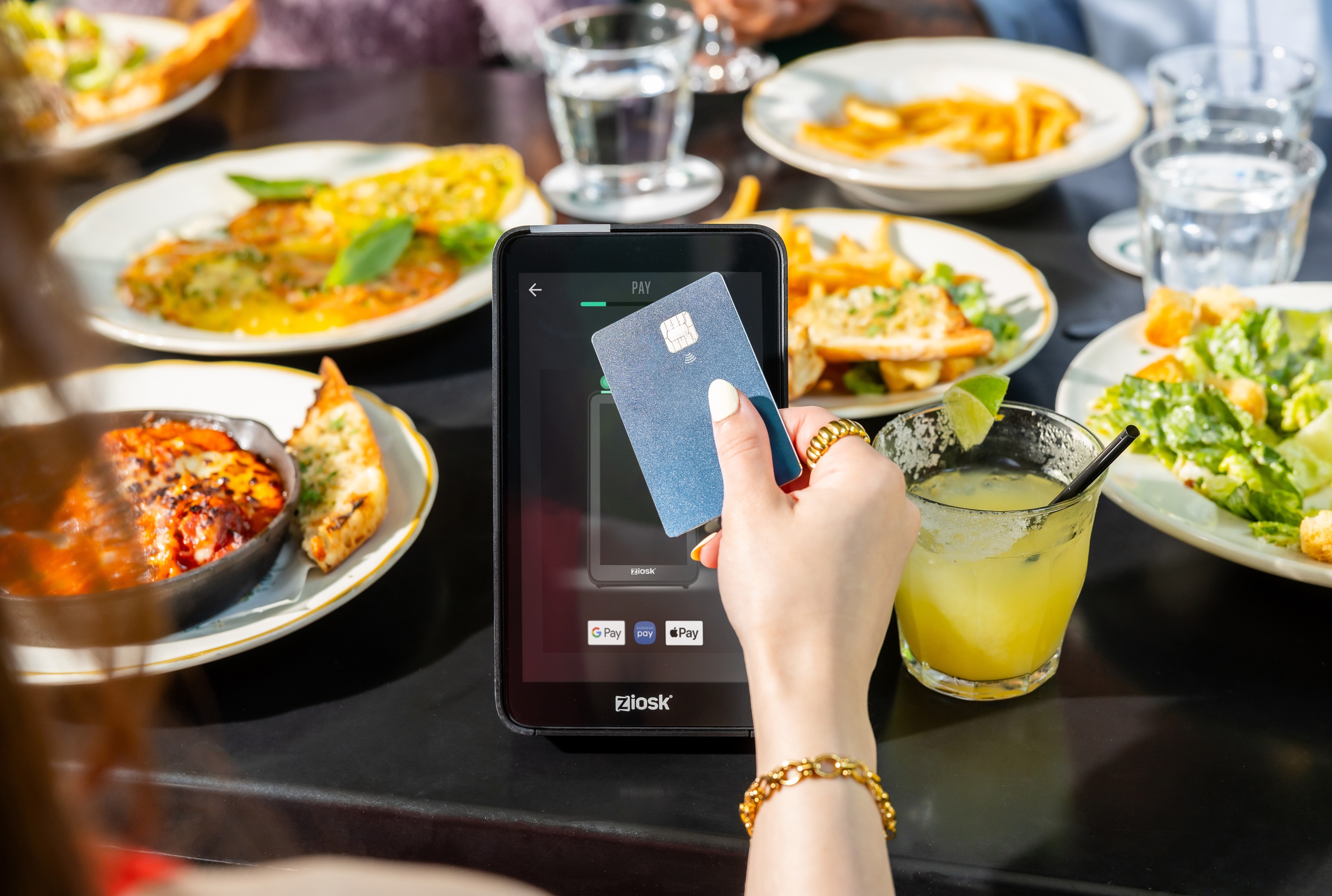
Ziosk is present where and when guest decisions happen. When someone wants another round, the ordering path is already there. When the table is ready to leave, payment is a few taps away.
The research suggests that this immediacy may create value beyond the current check. Guests who ordered through Ziosk returned up to seven days sooner, and the same-guest analysis showed a similar pattern.
The table is where intent becomes action. It may also be where the next visit begins.
Frequently asked questions
How much sooner did guests return after ordering through Ziosk
Guests who used Ziosk ordering features returned in a median of 23 to 26 days, compared with 30 days after payment-only visits. Appetizer orders were associated with the largest difference at seven days sooner.
Which ordering interactions were associated with the fastest returns
Guests who ordered an appetizer returned in a median of 23 days. Drink reorders and dessert orders were each associated with a median return interval of 24 days.
Did guests need to use multiple Ziosk features
No. The population-level pattern appeared after the first ordering interaction. Individual appetizer, drink, and dessert orders were each associated with faster returns.
Research note
This article is based on Ziosk proprietary data collected from June 2025 through June 2026. Return visits were identified using anonymized payment account reference tokens when available and card fingerprints when they weren't. Identifiers appearing at more than 10 restaurant locations were excluded to remove likely fleet and corporate cards. The analysis didn't use guest names or full card numbers. The findings describe observed associations within the analyzed visits. Individual restaurant results may vary.
Share this post
Discover More Insights from the Industry